Key points
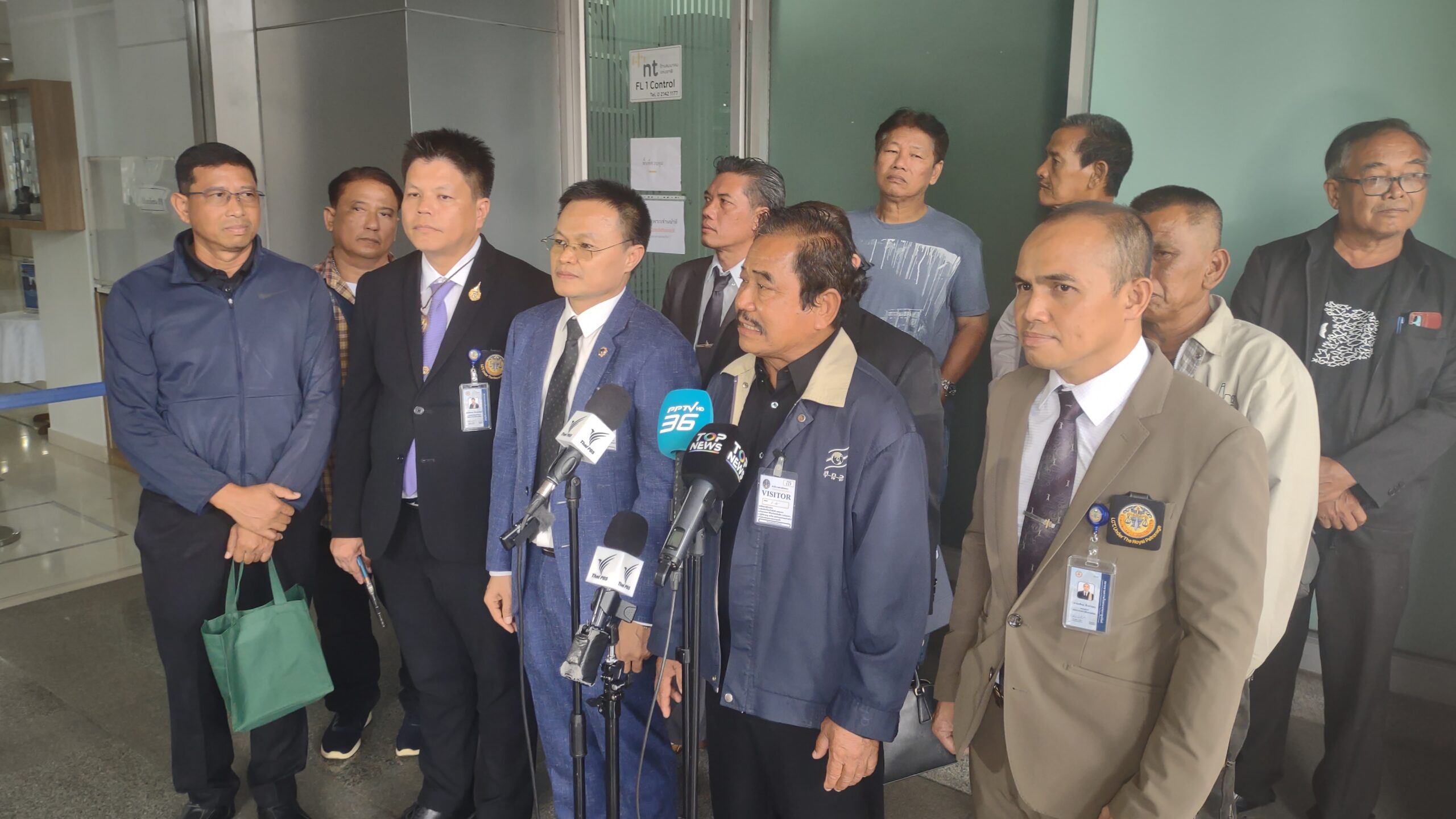
On 8 September 2026, in Courtroom 6 on the third floor of the Central Administrative Court on Chaeng Watthana Road, Bangkok, the court delivered its judgment in Black Case No. Sor. 14/2567 (2024), brought by 54 plaintiffs against the Department of Fisheries as first defendant and 17 other state bodies and officials — 18 defendants in all.
The case concerned the failure of administrative agencies and state officials to perform duties required of them by law, or performing those duties with unreasonable delay. The court ordered the Department of Fisheries to control and halt the outbreak within 180 days, and ordered the Ministry of Interior to open the way for a declaration of a disaster relief zone in Samut Songkhram province within 90 days.
A collapse in coastal aquaculture
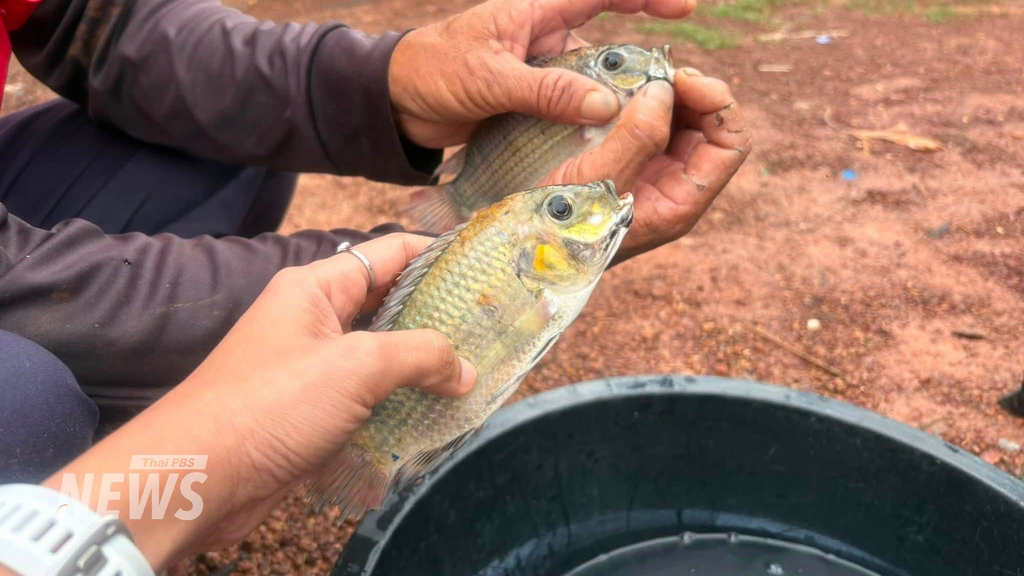
What people outside the affected areas usually miss is that the blackchin tilapia (Sarotherodon melanotheron) has not merely “reduced the catch.” It has erased entire livelihoods.
The fish tolerates fresh, brackish and salt water alike. It broods its eggs in its mouth, so survival rates of the young are extremely high. And it feeds on shrimp larvae and juvenile fish. Once it gets into a pond, a farmer does not simply lose one production cycle — the farmer has to stop stocking shrimp altogether.
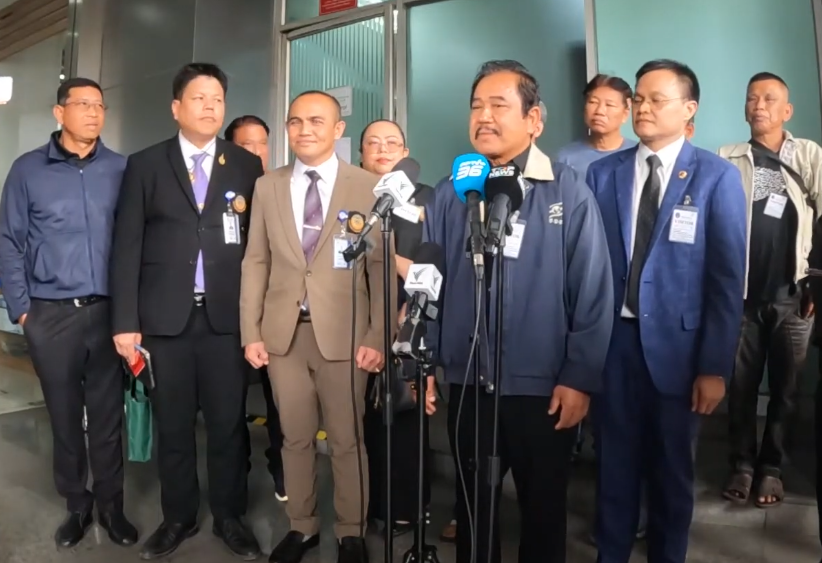
Speaking at a press conference after the judgment was read, a representative of the affected communities described the situation on the ground bluntly: this is no longer a matter of losses, but “the collapse of a way of making a living.” In many areas, land is being put up for sale. Many farmers have quit. Those who cannot switch to another form of farming are simply out of the occupation for good.
Data compiled by the working group of the Lawyers Council of Thailand under Royal Patronage puts the economic damage to affected farmers at roughly 2,486 million baht (about 2.5 billion baht). The damage to the ecosystem as a whole cannot be priced at all.
Worse still, the outbreak has not stopped. On 2 September 2026, video footage circulated of blackchin tilapia found at Lam Pao Dam in Kalasin province — the first confirmed sighting in the Northeast (Isan). That brings the number of provinces with confirmed outbreaks to 22, up from a spread previously confined to the Gulf of Thailand coastline.
What the court ruled
The Department of Fisheries must act
The court ordered the Department of Fisheries, through its Director-General, to carry out its duties under the Royal Ordinance on Fisheries B.E. 2558 (2015) — to control, prevent, remedy and suppress the breeding of the fish in outbreak areas — in line with the Action Plan on Resolving the Blackchin Tilapia Outbreak 2024–2027 and any other necessary measures. The Ministry of Agriculture and Cooperatives and its minister are to supervise the work and provide the budget and resources for it. The work must be completed within 180 days from the date the case becomes final.
One point deserves attention. The state argued that it had already carried out emergency measures and that fish densities had fallen as a result. The court took the view that this was only an initial success: as long as the plan has not been implemented in full and the ecosystem has not returned to balance, the state’s duty is not discharged.
Relief for affected communities
The court found that the outbreak in Samut Songkhram is a disaster requiring immediate action, and — importantly — that assistance under disaster relief law does not have to wait for proof of who let the fish escape.
Put simply: helping people who have lost their livelihoods is not conditional on first finding someone to blame.
The court therefore ordered the Minister of Interior to instruct the Governor of Samut Songkhram to consider declaring the province an emergency disaster relief zone, to be completed within 90 days from the date the case becomes final.
Citizens have a constitutional right to sue to protect their own environment
The court affirmed that people living in an affected area have standing to sue in defence of the environment even if they are not fishers or fish farmers, because the outbreak infringes their right to live in a balanced and sustainable environment. It further held that the state has a duty to solve the problem without waiting for citizens to ask first.
This is a principle that can be cited in future environmental cases in Thailand.
What the court did not decide
- It did not identify who caused the outbreak. The court stated that regardless of whether the problem originated in the actions of the company that imported the fish, the Department of Fisheries already had duties imposed on it by law.
- It dismissed the claims against 13 of the defendants, among them the Department of Marine and Coastal Resources and the Ministry of Finance.
Lawyers in the case stressed that a judgment of the Administrative Court of first instance is not immediately enforceable. It becomes final only if no appeal is lodged within 30 days — and in a case of this magnitude, an appeal is widely expected. The 90-day and 180-day clocks therefore do not start running from the day the judgment was read.
From the Gulf coast to Isan: watch Lam Pao Dam
- 2006 — The Institutional Biosafety Committee (IBC) of the Department of Fisheries granted a private company conditional permission to import blackchin tilapia from Ghana for research aimed at improving Nile tilapia breeding stock.
- December 2010 — 2,000 fry were imported to a farm in Yi San subdistrict, Amphawa district, Samut Songkhram province (permit No. 41/2554, dated 12 November 2010, as recorded in the judgment).
- Early 2011 — The company stated that almost all the fish died within three weeks and that the carcasses were buried. The Department of Fisheries maintains it never received the 50 specimens the permit required.
- 2012 — Farmers in Yi San subdistrict found blackchin tilapia in their ponds for the first time.
- 2012–2016 — The period during which, the court found, the outbreak took hold. Over that time the Department of Fisheries “never once monitored or inspected the research” from the day the permit was issued.
- 2024 — The government elevated the problem to a national agenda. The Department of Fisheries issued a notification designating outbreak zones (15 August 2024) and drew up the 2024–2027 action plan. In the same year, 54 citizens filed suit at the Central Administrative Court (Black Case No. Sor. 14/2567).
- 2 September 2026 — Blackchin tilapia found at Lam Pao Dam, Kalasin province — the first sighting in the Northeast, bringing the total to 22 provinces.
- 8 September 2026 — The Central Administrative Court reads its judgment (Red Case No. Sor. 9/2569).
Voices from the network: “We are not asking for money for ourselves”
The goal of the 54 plaintiffs was never individual compensation. On the day of the judgment, community representatives repeated that what they are demanding is that all 18 state agencies assess the damage and restore the ecosystem so that communities can go back to living normally.
What still leaves residents uneasy is that the judgment covers Samut Songkhram alone, while the citizens’ network operates across several provinces. Mr Panya Tokthong, a representative of the affected communities, said the network would discuss the point and consider appealing on that ground. He insisted that, according to what people see on the ground, blackchin tilapia numbers have “not declined” as agencies report — the fish is still expanding its range.
On the civil side, Mr Sitthiporn Leelanaphasak, committee member and secretary of the Environment Committee of the Lawyers Council of Thailand, said a suit has been filed against a private company and its directors — nine defendants in total — seeking more than 2,000 million baht in damages on behalf of more than 1,000 farmers and fishers in Samut Songkhram, with 10 named plaintiffs acting as class representatives. The South Bangkok Civil Court is due to rule on 14 September 2026 on whether the case will be certified as a class action.